
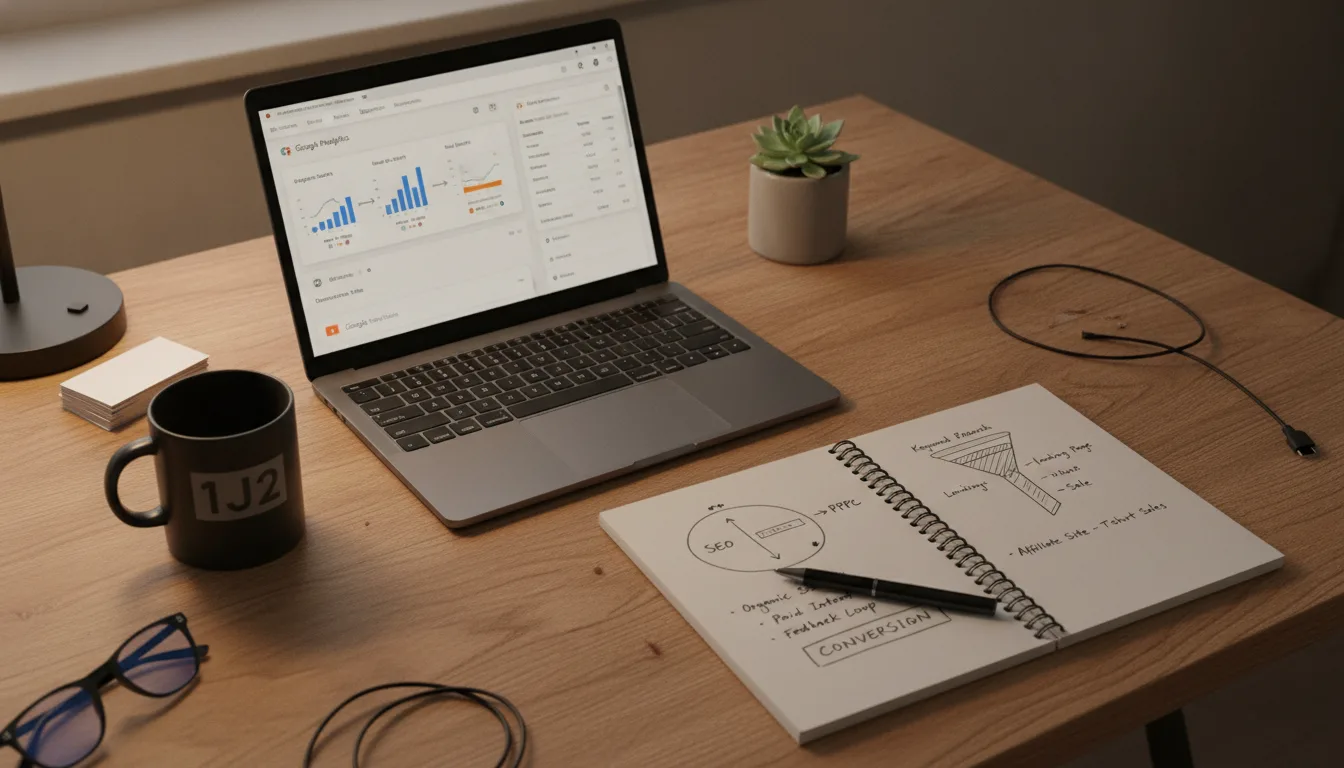
SEO and PPC used to be talked about as if they were opposing camps. One was the respectable long game where you earned traffic from Google. The other was the shortcut where you paid for it.
Having worked with both for years, I eventually thought that was the wrong way to look at them. They were different systems, with different economics, but each could tell you something useful about the other.
Organic search gave me scale. Paid search made every assumption cost money.
When I started building websites in the late 90s and early 2000s, getting found in search quickly became part of the job. Organic search was attractive for obvious reasons. Build the right page, get it ranking, and traffic could keep arriving without paying for every individual visit.
But that could also make it easy to become impressed by the wrong number. A page ranking well and attracting traffic looked successful, even if the visitors were not especially valuable.
Paid search changed the calculation because every click had a cost attached to it. If I was paying to send somebody to a page, I wanted to know what they had searched for, why they had clicked and whether that visit eventually produced anything useful.
That pressure made PPC one of the best lessons I ever had in search intent.
One of my old affiliate systems made the connection very obvious
I ran an affiliate T-shirt site with pages built around different interests and searches, including categories such as funny T-shirts and offensive T-shirts. I was not interested in knowing only that somebody had arrived from Google. I wanted to know which search had brought them in and which traffic actually resulted in a sale.
I used referrer and keyword data alongside Commission Junction SID tracking so I could connect affiliate sales back to the traffic that generated them. I also used the Google Ads API to create relevant ads, particularly around cheaper long-tail searches.
That changed the way I thought about both PPC and SEO. A keyword was no longer interesting simply because it had search volume. It was interesting if the person behind it behaved like somebody who might actually buy.
Paid search could reveal that very quickly. If I paid for a particular type of visitor and those visitors consistently converted, that was useful information. It could influence the pages I built, the wording I used and where I put my effort organically.
SEO could then do something PPC could not
PPC was immediate, but the traffic stopped when the spending stopped. Organic search worked differently. If I learnt that a particular subject, product category or search intent was genuinely useful, SEO gave me a way to build something around it that could continue working without buying every visit individually.
That is where the two channels became much more interesting together.
- PPC could test whether an idea attracted the right people.
- Conversion data could show which searches had genuine commercial intent.
- SEO could turn those lessons into pages and content with a longer lifespan.
- Organic performance could uncover new searches worth testing with paid traffic.
It was a feedback loop rather than a choice between two competing disciplines.
The lesson was not really about SEO or PPC
The bigger lesson was to stop treating traffic as a single thing.
Two visitors can arrive on the same website and be worth completely different amounts to the business. One might be researching a subject with no intention of buying. Another might be looking for exactly the product or service being offered and be ready to act immediately.
That sounds obvious now, but it becomes much more obvious when one of those clicks has just cost you money.
I wrote separately about what paying for every click taught me about true customer intent, because that way of thinking stayed with me long after the individual campaigns did.
I still think about systems in the same way
Today I am far more interested in building my own products and systems than running SEO and PPC as separate services, but the principle is the same. I want different parts of a system to inform each other.
That is part of the thinking behind Control Room. Data is much more useful when it can be connected to what happened before and after it, rather than being trapped in a dashboard as an isolated number.
The same applies to affiliate work now. A video view, product click or order is more useful when I can understand the path between them. The tools have changed, but the question has not: what actually caused something valuable to happen?
SEO versus PPC was always the wrong argument
I do not think the useful question was ever whether SEO was better than PPC, or whether businesses should choose one over the other.
The useful question was what each channel could teach you.
SEO could show where sustained demand existed. PPC could put a price on your assumptions and give you fast feedback on intent. Conversion data could tell you whether either source of traffic was actually achieving anything.
Once I started looking at them that way, the supposed fight between SEO and PPC became much less interesting than the information moving between them.


